

Shinto Intelligence
Shinto priest Taishi Kato offers a Shinto lens to our understanding of AI. As machines begin to outperform humans at the tasks once considered uniquely ours, Kato draws on concepts like kotoage sezu – the wisdom of not over-asserting through words – and musubi, the generative force of relationship, to propose a different kind of intelligence. His essay reads AI not as threat or tool but as mirror, and finds in Shinto a practice for meeting this moment: not with certainty, but with openness.
Taishi Kato
The emergence of artificial intelligence has brought humanity far more than a new technology. It is quietly unsettling one of the assumptions that has shaped modern civilization: what it means to be human.
Since the modern era, human beings have often been understood primarily as rational beings. Our ability to describe the world through language, classify it into concepts, and comprehend it through logic has long been regarded as the defining characteristic of humanity.
As a Shinto priest, I believe Shinto offers an important perspective on the future of AI
Today, however, generative AI performs many of these intellectual activities with a speed and scale far beyond human capacity. If intelligence and logical reasoning are no longer uniquely human, then what remains at the heart of our humanity?
As a Shinto priest, I believe Shinto offers an important perspective on the future of AI. Shinto contains an ancient expression: kotoage sezu – literally, “refraining from excessive assertion through words.”
This does not mean rejecting language. Rather, it begins with the recognition that the world can never be fully grasped through human language or reason alone. Human beings name things, classify them, and define them in order to understand the world. This process has enabled science, philosophy, and civilization itself to flourish.
Human beings name things, classify them, and define them in order to understand the world. These categories are useful intellectual tools, but they are not the world itself.
Yet there is also a hidden danger. Over time, we begin to mistake our descriptions of reality for reality itself. We divide the world into categories: right and wrong, human and AI, conservative and progressive, Japanese and foreign.
These categories are useful intellectual tools, but they are not the world itself. When we forget this distinction, we cease encountering individual beings as they truly are. Instead, the categories we have created begin confronting one another.
Perhaps social division does not arise simply because people hold different values. It begins when we become convinced that our own understanding of the world is identical with reality itself.
Kami, in this sense, is not an object of possession or complete comprehension. It is a way of acknowledging that life always exceeds our concepts
The Shinto vision of yaoyorozu no kami – often translated as “the eight million kami” – offers a fundamentally different way of seeing. This expression does not merely suggest that Shinto has many gods. Rather, it reflects the recognition that countless forms of life, agency, and creativity exist beyond the limits of human understanding.
Mountains, rivers, winds, forests, ancestors, and places are all regarded as possessing sacred presence – not because they are supernatural objects, but because they embody dimensions of existence that can never be exhausted by human explanation.
Kami, in this sense, is not an object of possession or complete comprehension. It is a way of acknowledging that life always exceeds our concepts.
A mountain is not sacred because we cannot explain its geology. Even after we understand its formation scientifically, something remains that cannot be reduced to explanation alone. Shinto invites us to approach that inexhaustible depth with reverence.
For this reason, Shinto has valued not the certainty of saying “I understand,” but the humility of sensing that there is always something still left to understand. This attitude has also shaped Japanese society.
For centuries, Shinto, Buddhism, Confucianism, and later Western philosophy have coexisted in Japan despite often containing contradictory assumptions. Rather than organizing society around an absolute truth, Japanese culture has preserved space where multiple ways of understanding the world may exist together.
Shinto has valued not the certainty of saying “I understand,” but the humility of sensing that there is always something still left to understand
Underlying this cultural tendency, I sense the Shinto principle of musubi. Musubi is often translated as “connection,” but its meaning is far richer. It is the generative force through which different beings encounter one another and, through relationship, continually bring forth new life, new meanings, and new possibilities.
Reality is not composed of isolated individuals. It is continuously created through relationships. Seen from this perspective, our relationship with AI begins to appear differently. Is AI an enemy or an ally? Will it replace humanity, or is it merely a tool? These questions themselves may reveal our tendency to simplify reality into binary oppositions.
Reality is not composed of isolated individuals. It is continuously created through relationships. Seen from this perspective, our relationship with AI begins to appear differently.
Perhaps AI is better understood as a mirror through which humanity encounters itself. AI has not invented intelligence from nothing. Its intelligence is formed by absorbing humanity’s accumulated language, knowledge, literature, science, culture, and history. But it also absorbs our prejudices, fears, desires, assumptions, and biases. AI therefore reflects not only what humanity knows, but also what humanity has become.
To engage with AI is not simply to converse with another intelligence. It is to confront humanity’s own civilization as reflected back to itself. In this sense, AI may not be recalibrating humanity itself. Rather, it is recalibrating the way we understand intelligence, creativity, knowledge, and ultimately ourselves.
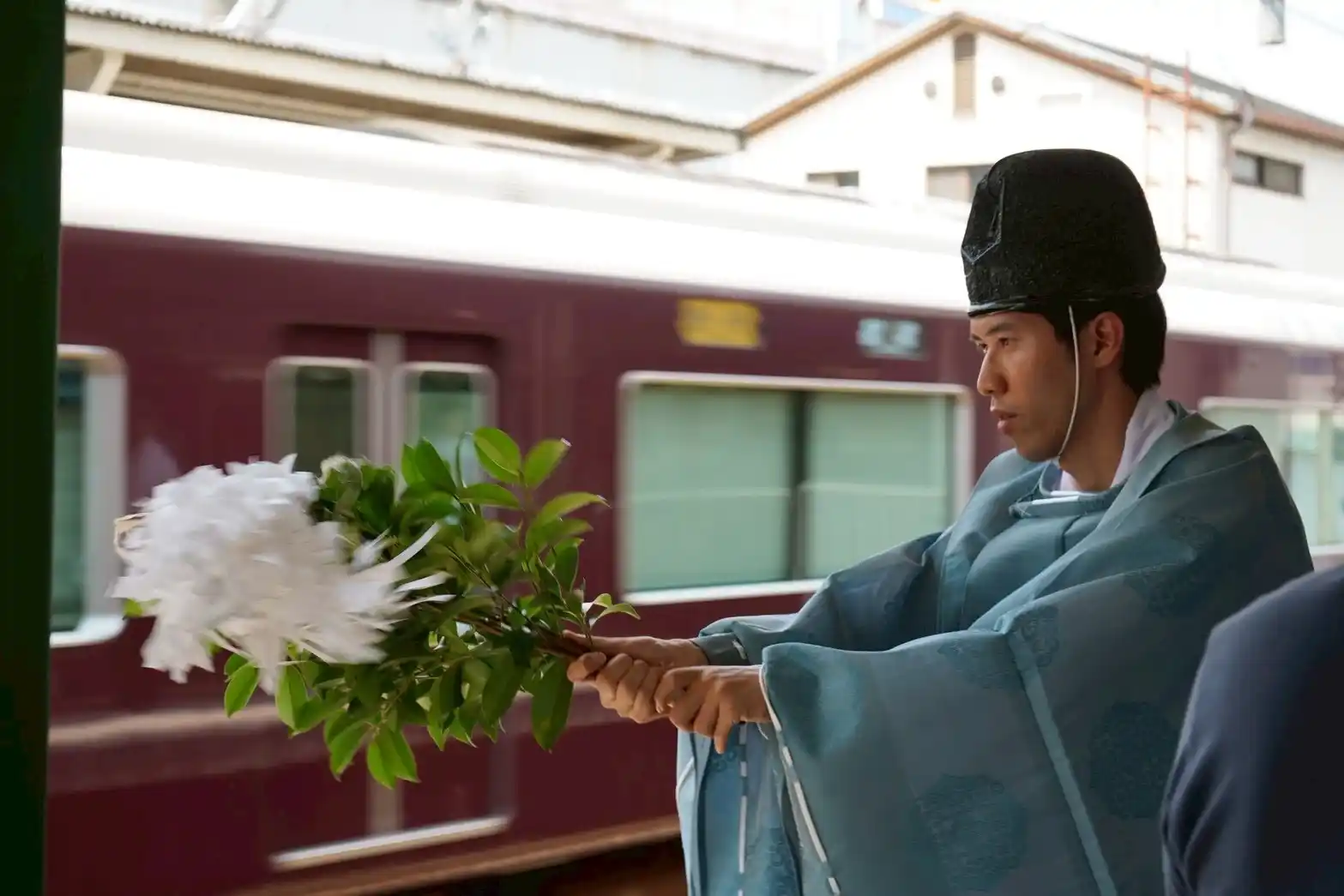
Shinto has long cultivated practices that continually renew perception. One of these is the Great Purification ritual, Ōharae. It is commonly described as a ceremony for removing impurity. Yet in Shinto, impurity does not simply refer to moral wrongdoing.
It also includes the unnoticed accumulation of attachment, fixed assumptions, emotional stagnation, and ways of seeing that separate us from the living world. Purification is therefore not about changing the world. It is about restoring our relationship with it.
It loosens rigid perceptions, allowing us to encounter reality again with fresh eyes. Perhaps this is why Shinto repeatedly performs rituals – not because the world continually becomes impure, but because human perception continually becomes fixed.
Purification is therefore not about changing the world. It is about restoring our relationship with it
The age of AI may therefore require something more important than greater intelligence. It may require the courage to question our own assumptions, the humility to recognize the limits of our understanding, and the openness to remain in relationship with a reality that always exceeds our concepts.
Perhaps this is what Shinto understands as intelligence. Intelligence is not merely the capacity to calculate, analyze, or solve problems. It is the capacity to remain open to a world that can never be fully mastered. It is the wisdom to continue learning without claiming complete understanding, and to allow new relationships to generate new possibilities.
Intelligence is not merely the capacity to calculate, analyze, or solve problems. It is the capacity to remain open to a world that can never be fully mastered
Coexisting with AI does not mean making AI more human. It may mean allowing this new form of existence to teach human beings, once again, what it truly means to be human.
If AI offers humanity a profound gift, it may not be the expansion of intelligence. It may instead be the opportunity to rediscover a deeper form of intelligence – one grounded not in certainty, but in humility; not in domination, but in relationship; not in possessing the world, but in continually opening ourselves to it.
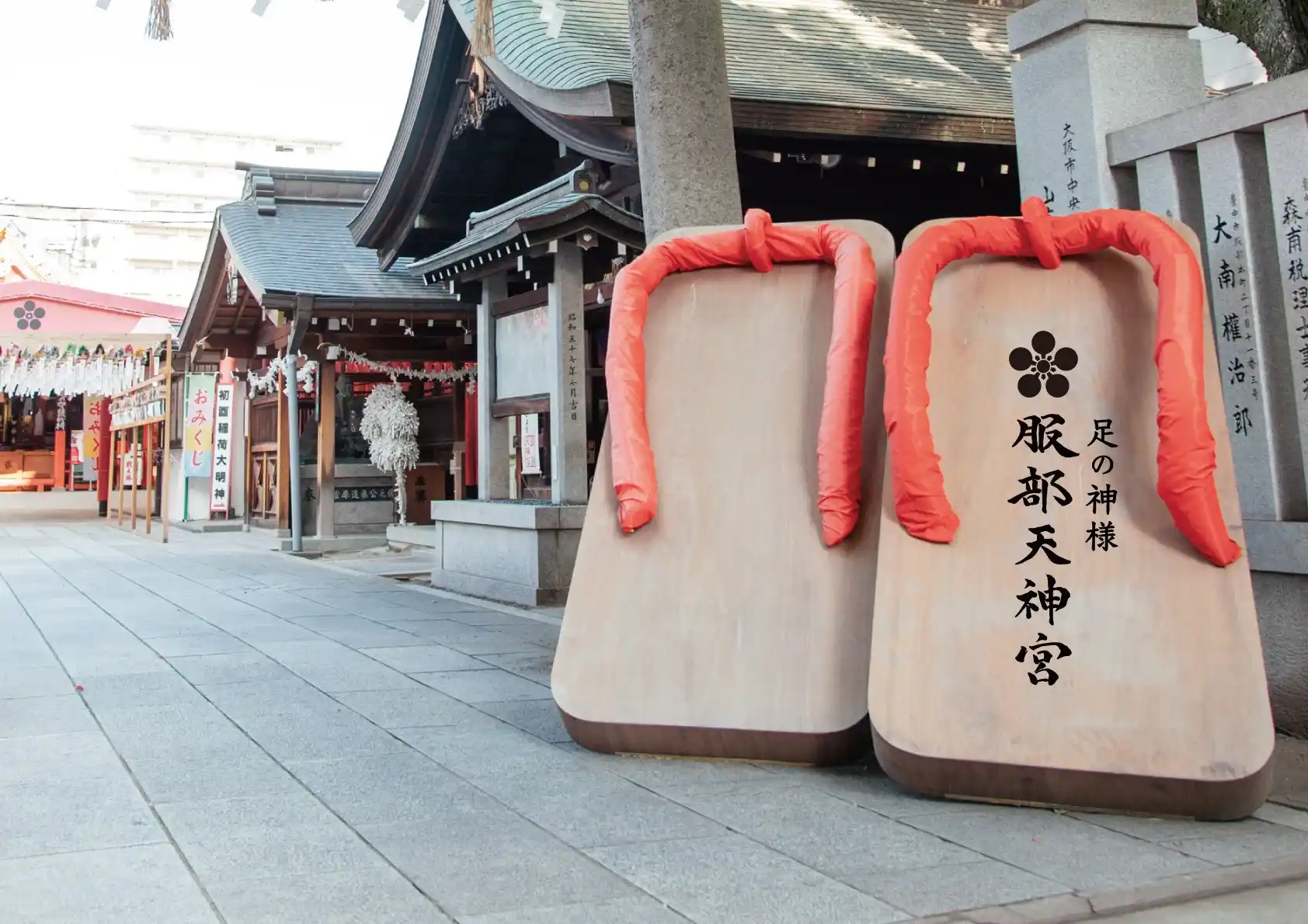
Taishi Kato is a Shinto priest at Hattori Tenjingu Shrine. Kato was born the eldest son of a multi-generational family serving their 1000-year-old Shinto shrine. He graduated with a Master of Arts in Religions of Asia and Africa at the School of Oriental and African Studies (SOAS) from the University of London and is committed to introducing Shinto to people all around the world.
Kato also participated in The Religions for Peace 10th World Assembly as the representative of Shinto and represented Japanese religious leaders at the G20 Religion Summit in Indonesia 2022.