

Mystical Visions, Mathematical Visualizations and AI
Isabelle Bucklow, cultural critic, asks why AI is so elusive to visualize, and how images can go beyond decoration. From the biblical prohibition on images to the “iconoclasm” of modern mathematics, Bucklow traces a distrust of visual representations and instead looks to mystical visions. There are Benoit Mandelbrot’s fractals and Hilma af Klint’s automatic paintings, images created from places of unknowing. Rather than cute avatars or dystopian clichés, Bucklow proposes images as ways of being, and as a means of glimpsing into what lies beneath the surface of AI.
Isabelle Bucklow
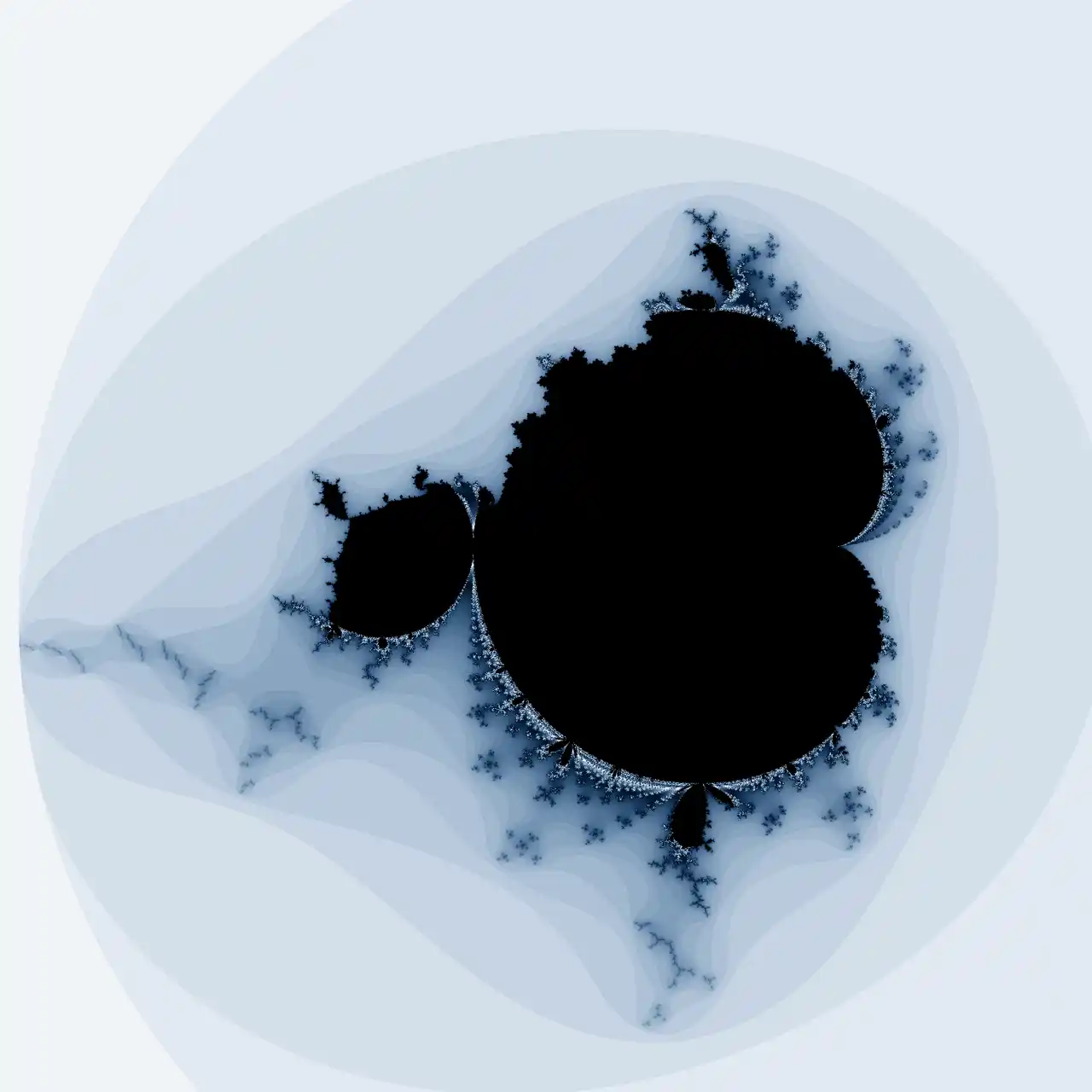
“I felt like someone trying to photograph the Cheshire cat in Alice in Wonderland at the very moment it is about to disappear.” – Benoit Mandelbrot
“If there is an equation for a curve bell, there must be one like a bluebell. And if a bluebell, why not a rose?” – Tom Stoppard
Once, to see was to believe. Today, what we see – from billboards to online snapshots – must be interrogated. An estimated 34 million AI-generated images are created daily, making around 20% of recommendations on social media platforms. Despite the prolific visual output generated by AI platforms, the visual presence of the systems themselves – their user interface – remains relatively imageless. Quite what is making that is unclear. The only insight we are given into the generating process is a form of pulsing icon, “spinner verbs” hinting at background activity, a minimalist grid of dots that swell and shrink.
There is a good reason for large language models' spare UI, no doubt cognisant of the seductive power of images to catalyze dependency, over identification or anthropomorphizing. But that was then. Come September’s slew of “Dev Days” – where tech leaders take to stage to showcase (with albeit awkward theatrics) new software and tools to an audience of software engineers, developers, and creators – many of the leading AI labs introduced customizable characters that give presence to their agents. Text and image no longer emerge from nothing; they’re generated by a pink, fluffy soft-edged shape wearing a beret.
Text and image no longer emerge from nothing; they’re generated by a pink, fluffy soft-edged shape wearing a beret.
With increased skepticism around AI, the adorable agents’ emergence was inevitable. It’s more reassuring to give your data to a cute wide-eyed avatar than to an invisible presence lurking in your desktop. And yet these avatars tell us nothing about the nature of AI; they’re cosmetic.
Quick image searches do little better. Visual representations of AI are trapped in dystopian sci fi, outstretched robotic hands meeting human hands, pulsing machinic networks fusing with fleshy brains, in luminescent palettes of electric blue and violet. So why is AI’s visual iconography so limited?
AI is hard to visualize because intelligence is hard to visualize. Robert Epstein, Senior Research Psychologist at the American Institute for Behavioral Research and Technology in California wrote: “Our shoddy thinking about the brain has deep historical roots, but the invention of computers in the 1940s got us especially confused. For more than half a century now [...] experts on human behavior have been asserting that the human brain works like a computer.” We see things ‘as’ they all too often slide into equivalence, as ‘is’. George Lakoff observed that neuroscientists commonly use computation as a metaphor “without realizing it is [just] a metaphor.” All too often we confuse our knowledge of the world for the world itself; as Alfred Korzybski cautioned, “the map is not the territory”, rather it is a representative abstraction far removed from the reality of place.
AI is hard to visualize because intelligence is hard to visualize.
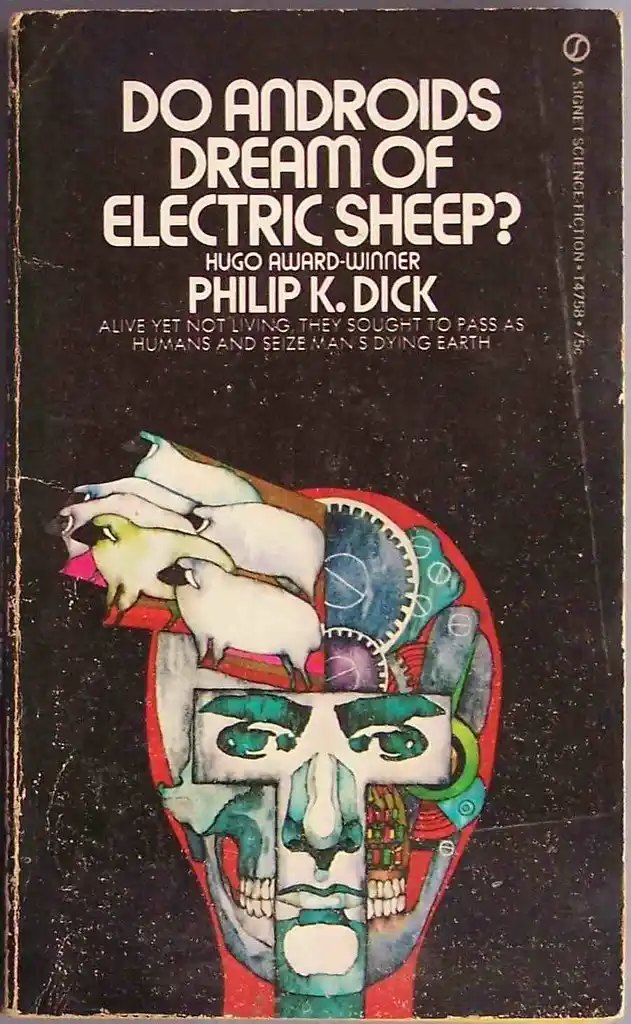
Philip K. Dick – whose sci-fi has done much to influence transhuman iconography – wrote “If you can get [people] to see the world as you do, they will think as you do.” The images we make of and that accompany artificial intelligence are important – how we think about it influences how we use it, how we use it influences how we think. Images are not just decorative marketing but can be necessarily constitutive of thought. Often, those kinds of images or workings remain hidden in studies and labs, but what if they were made public? Images and pictorial technologies give rise to knowledge, they illuminate longstanding scientific and existential questions and pose new ones. Beyond the window-dressing, there exist alternatives for AI companies to meaningfully engage with the visual.
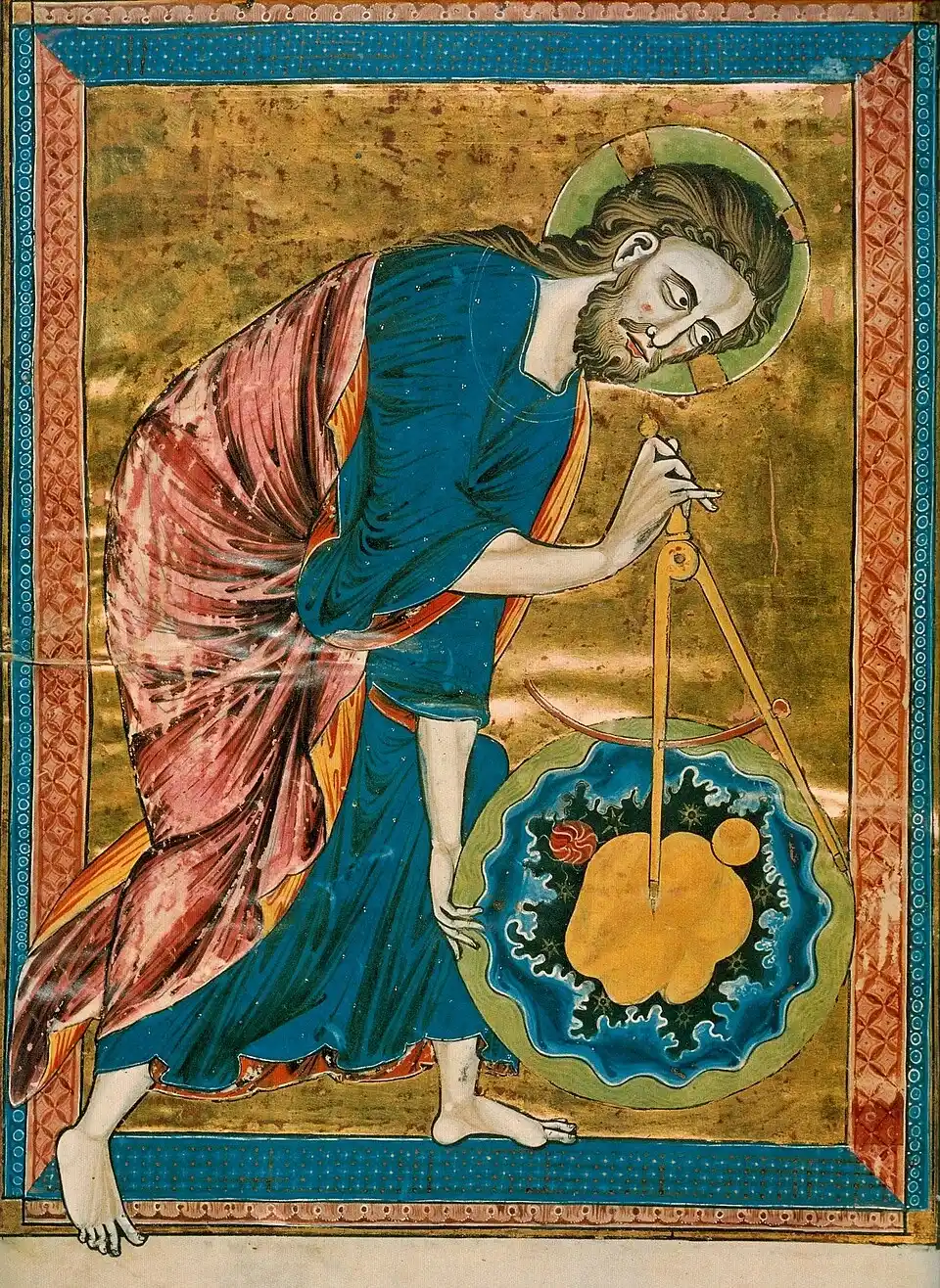
Let’s start at “the beginning”, which, according to the Gospel of St. John, “was the Word”. The Old Testament prohibition against images established the primacy of speech and text in Abrahamic religions. And yet images became media through which the divine could be approached. They provided synoptic overviews of vast swathes of space and time, frameworks giving order to chaos. Tasked to render visible an invisible God, artists adopted sacred geometry to make the divine present through structure. From the thirteenth-century, God is shown as the original sacred geometer, compasses in hand, circumscribing an indeterminate mass within line, reinforcing the notion of a world built on geometric principles. By the 16th century, reformers John Calvin and Martin Luther, accused Christians of becoming image worshippers. To deactivate the problem meant deactivating the image. Icons were destroyed systematically, images lost under whitewashed walls, human features defaced. The Word reigned once more.
Images became media through which the divine could be approached.
This distrust of image extends beyond religion. In 1899, Mathematician David Hilbert’s Foundations of Geometry showed how geometry – previously spatial, based on what could be seen or drawn (thus constituting proof) – could be axiomatized. The more mathematics broke away from human understanding of space, the more difficult it became for the eye to keep up, and the more inadequate graphics became. Later in the 1930s, a collective of mathematicians under the pseudonym Nicolas Bourbaki pronounced mathematics a poetry of ideas not images. Regarding the dearth of illustration in their work, member Pierre Cartier explained: “The Bourbaki were Puritans, and Puritans are strongly opposed to pictorial representations of truths of their faith.” Media historian Bernhard Siegert referred to this “plunge of mathematics into the unimaginable” as “iconoclasm.”
AI, often referred to as a black box system, is the opposite; you can see the inputs and outputs, but the internal reasoning remains opaque even to those who built it.
While Bourbaki argued mathematics should (and could) be transparent down to the depths. AI, often referred to as a black box system, is the opposite; you can see the inputs and outputs, but the internal reasoning remains opaque even to those who built it. In Dostoyevsky’s The Brothers Karamazov, Ivan humbles his brother’s speculations into the nature of God and the potential for two parallel lines to meet as “utterly inappropriate for a mind created with an idea of only three dimensions.” It is a moral that perseveres, as in Stanislaw Lem’s science fiction novel Solaris: despite the Solarists’ attempts to explain the occurrences of the Solarian ocean (itself a proxy for AI), “the meaning of this seemingly rational activity seems beyond the reach of human beings”. Nevertheless, it’s tempting to think we might breach the threshold. The History of Science is a story of technological innovation bringing tools that offer new ways of seeing and knowing. Microscopes led to cells and germ theory, whilst telescopes ventured beyond the solar system. It seems the limits of understanding depend on the limits of visualisation, as Nietzsche wrote: “our thoughts depend on the instruments that make them.”
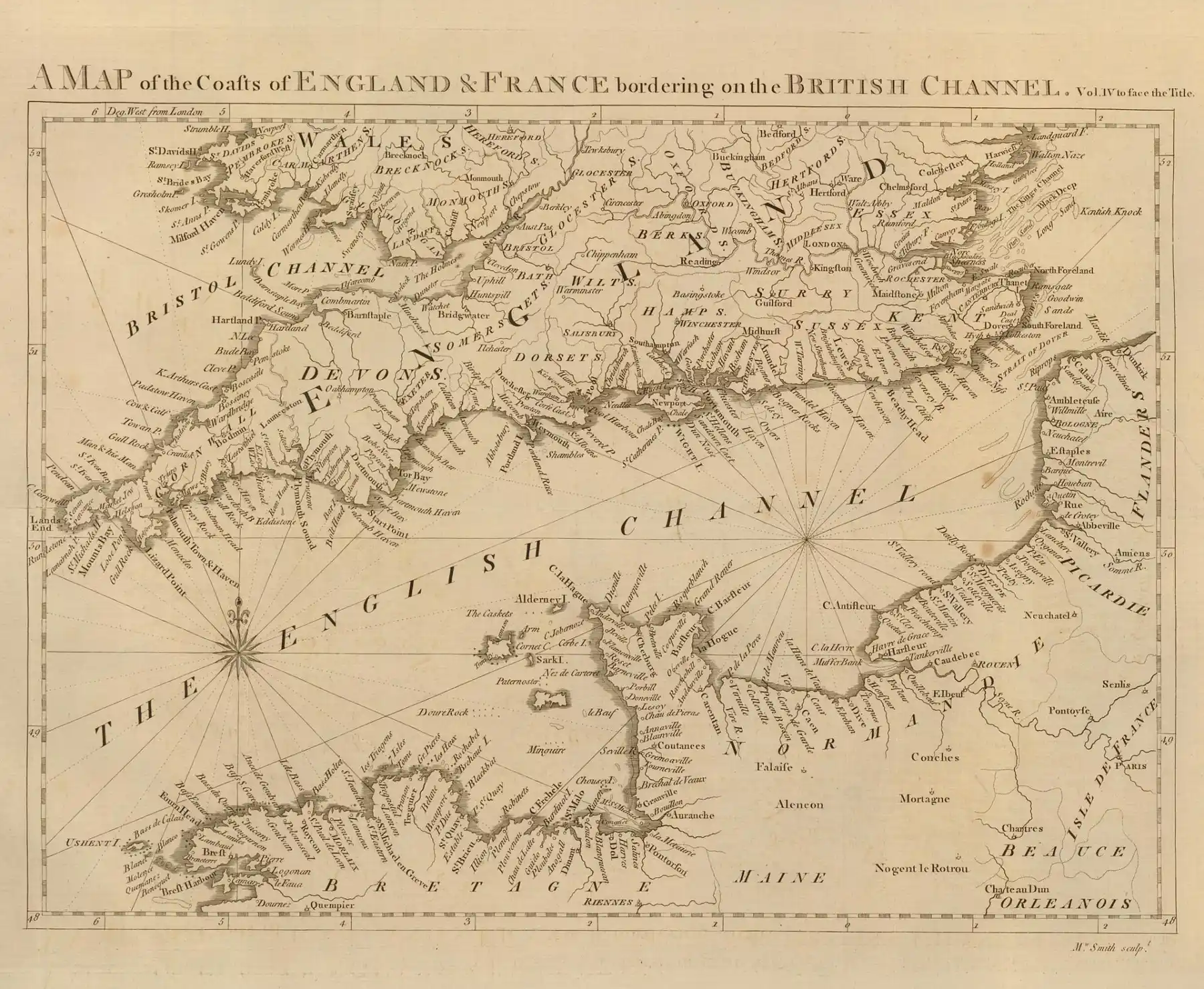
Which brings us back to computers and images. In 1961, mathematician Benoit Mandelbrot was hired by IBM to work on the problem of noise in the telephone transmission of computer data. Looking at graphic data he noticed a pattern he’d seen elsewhere, when conducting research prompted by the question "How long is the coast of Britain?" There, the smooth regularity of Euclidean geometry had proved, as Ivan warned, “utterly inappropriate”. Zooming in on coastlines Mandelbrot found them rough and complex, constantly revealing jagged new details. The paradox was that the length of coastline could not amount to a fixed number, as it changed depending on the scale of the unit of measure used. Later, in 1975, he coined the term "fractal" for such forms that repeat their self-similar structures across scales. There is a spiritual dimension to this discovery, for the fractal implies a hidden structure extending ever bigger and ever smaller than a mind – of only three dimensions – can envisage.
There is a spiritual dimension to this discovery, for the fractal implies a hidden structure extending ever bigger and ever smaller than a mind – of only three dimensions – can envisage.
Since he was a child, Mandelbrot had visions: “When the professor read the problem that was a question of algebra or of analysis, I did not hear formulas, but saw pictures.” So, it was only appropriate that he developed his fractal theory, and famous Mandelbrot Set, through pictures; using IBM computers to generate graphic renders of his equations. The computers’ capacity to repeat calculations and add details iteratively made images that broke from pictorial tradition. Initially, computer-room operators would throw away his results, mistaking them for misprints muddied with dust specks, but he persevered, affectionately terming these inky blotches “offshore islands”. For years Mandelbrot tried to understand if these blotches were linked. He suspected they were “in fact attached by threads that evade the computer”, prophesizing; “To see in colour may lead to an even higher intensity of belief.” Indeed, thanks to the advent of colour graphics, adjoining lines did emerge from these once-empty zones. Later Mandelbrot would tease; “Wouldn’t ‘In the beginning was the Word’ have to be replaced with ‘In the beginning was the picture?’”. There is a certain ecstasy in the fact that Mandelbrot's blot shares a likeness with the nebulous mass inscribed by God, the sacred geometer, in the thirteenth century frontispiece of Bible Moralisée.
Since he was a child, Mandelbrot had visions: “When the professor read the problem that was a question of algebra or of analysis, I did not hear formulas, but saw pictures.”
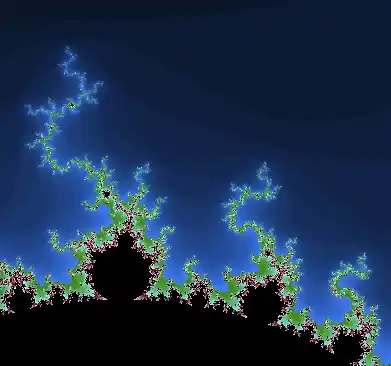
Mandelbrot’s fractals spread from scientific communities to artists, musicians and playwrights (the protagonist of Tom Stoppard's Arcadia attempts to describe the fractal geometry of a leaf leading her to publish New Geometry of Irregular Forms). By 1985, when personal computing was gaining momentum, August’s Scientific American cover-story shared the Mandelbrot Set algorithm, letting hobbyists conjure images for themselves. Speaking of its appeal, James Gleick observed how Mandelbrot's Set succeeded in “bringing complex systems before a large public.” The visual phenomena spread because, as Mandelbrot said, “the problem with the calculations is that they became very much specialised in the different fields. On the contrary, the eye is […] a universal tool.”
In 2024, Google DeepMind established Visualising AI, a project aimed at engaging and fostering public understanding of AI through approachable communication. A reputable endeavor. The project invited artists and designers to spend time with scientists, engineers and researchers to create new visions of AI. What resulted was a range of aesthetics and approaches that while breaking stereotypes, remained within the sanitized realm of marketing. The renderings did not go far beyond the DeepMind blog. What's more, the trajectory was one-way, the artist render emerged as secondary to, and illustrative of, the science. Mandelbrot saw it differently. In conversation with Curator Hans Ulrich Obrist, he cited all manner of artists and art historical styles – from Persian, Indian and Mughal architecture to JMW Turner – that engaged with fractals: “Historically, painters have always seen the possibilities of fractal structure, but it did not develop into a geometry [...] I feel very privileged to have filled the role of bringing together phenomena that scientists had missed, and painters or photographers have implemented but never formalised.”
The visual phenomena spread because, as Mandelbrot said, “the problem with the calculations is that they became very much specialised in the different fields. On the contrary, the eye is a universal tool.”
One of those artistic antennas was Hilma af Klint. The Swedish painter and mystic lived through numerous scientific breakthroughs that expanded fields of vision – including electromagnetic waves (1886), X-rays (1895), subatomic particles (1897) – and claimed her own stake in further revelations: “I am an atom in the universe that has access to infinite possibilities of development. These possibilities I want, gradually, to reveal.” In 1984, the theosophist and occult chemist Annie Besant gave a lecture at the Swedish Theosophical Society, which Klint, a member, had attended. Besant’s research into ‘Thought Forms’ sought to “observ[e] the substance of thought” through clairvoyance. It was believed that even atomic structures could be revealed through clairvoyant observation thanks to the magnifying third eye. Besant’s practice of clairvoyance inspired Klint to develop her own approach of automatic painting where hand, eye and mind worked in tandem to reach beyond the known.
Freed of representational platitudes, what she produced was unfamiliar even to herself: “The pictures were painted directly through me, without any preliminary drawings, and with great force. I had no idea what the paintings were supposed to depict”. Art Historian Briony Fer proposed “Klint was less a code-breaker than a code-maker”, someone whose entirely self-generated and self-generating system brought forth a new visionary language and, as such, accessed a different order of knowledge. Before Mandelbrot would observe how “computer graphics [are] altogether changing the role of the eye [...] bringing it back as an integral part of the process of thinking, search and discovery”, Klint’s aesthetic discoveries were indebted to the magnifying, clairvoyant eye.
Even atomic structures could be revealed through clairvoyant observation thanks to the magnifying third eye.
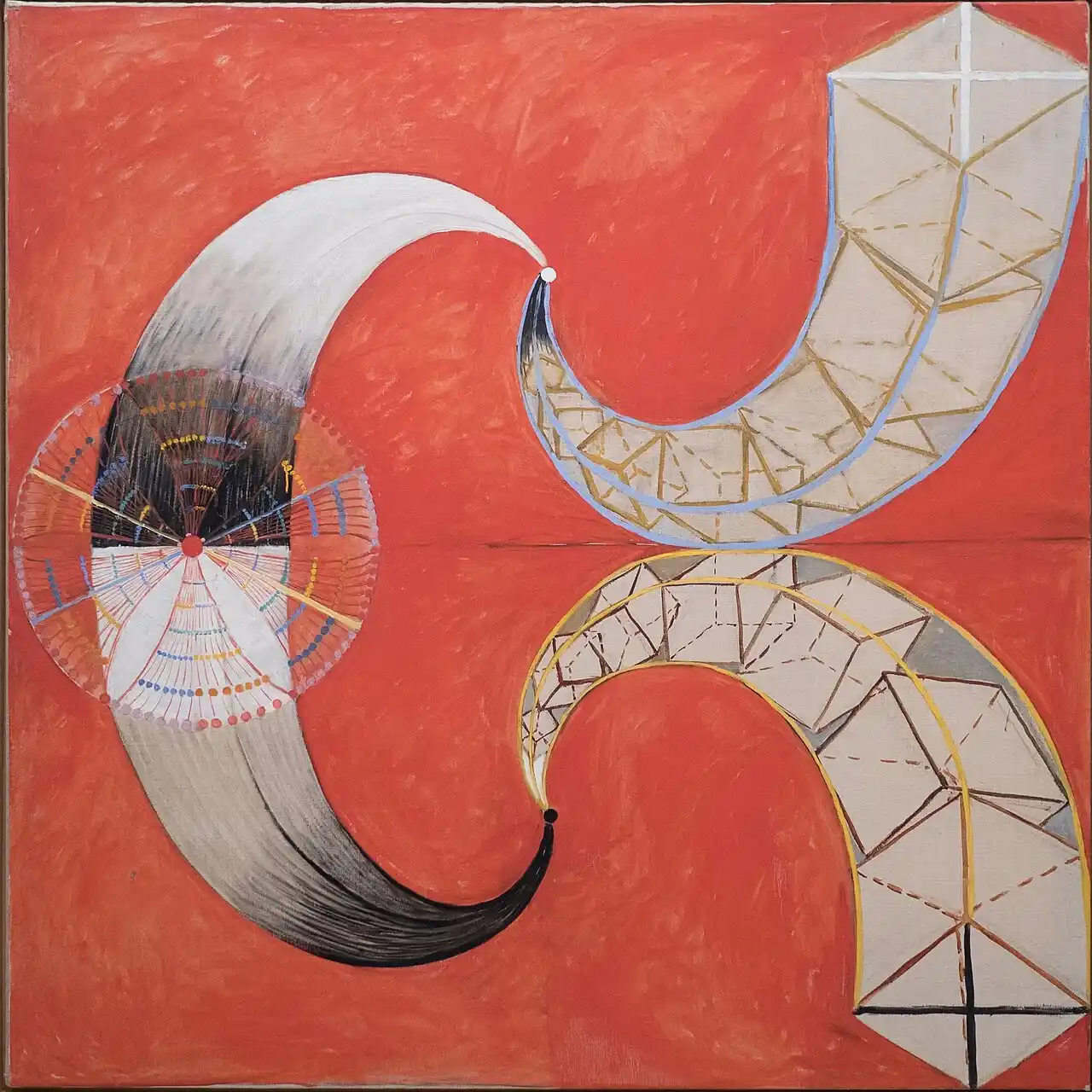
Fractals and mystic visions are fundamentally different from AI, but they’re precedents for an image – or code – that begins from a place of unknowing. Earlier in July, Anthropic published a paper on Claude’s J-space – a space described as “operating silently”, in Claude’s “internal neural activations”. The J-space enables the model to think in the background without speaking aloud or writing down. This space was not programmed by Anthropic but emerged during Claude’s training process. To set the scene, the authors begin “out of everything happening in your brain right now, only a tiny fraction is consciously accessible [...] We found a strikingly similar divide inside our AI model, inside Claude's internal architecture.” This was accompanied by a visual animation of a ship upon the ocean. “If the mind is an ocean, we spend our lives floating at the surface,” the narration stated.
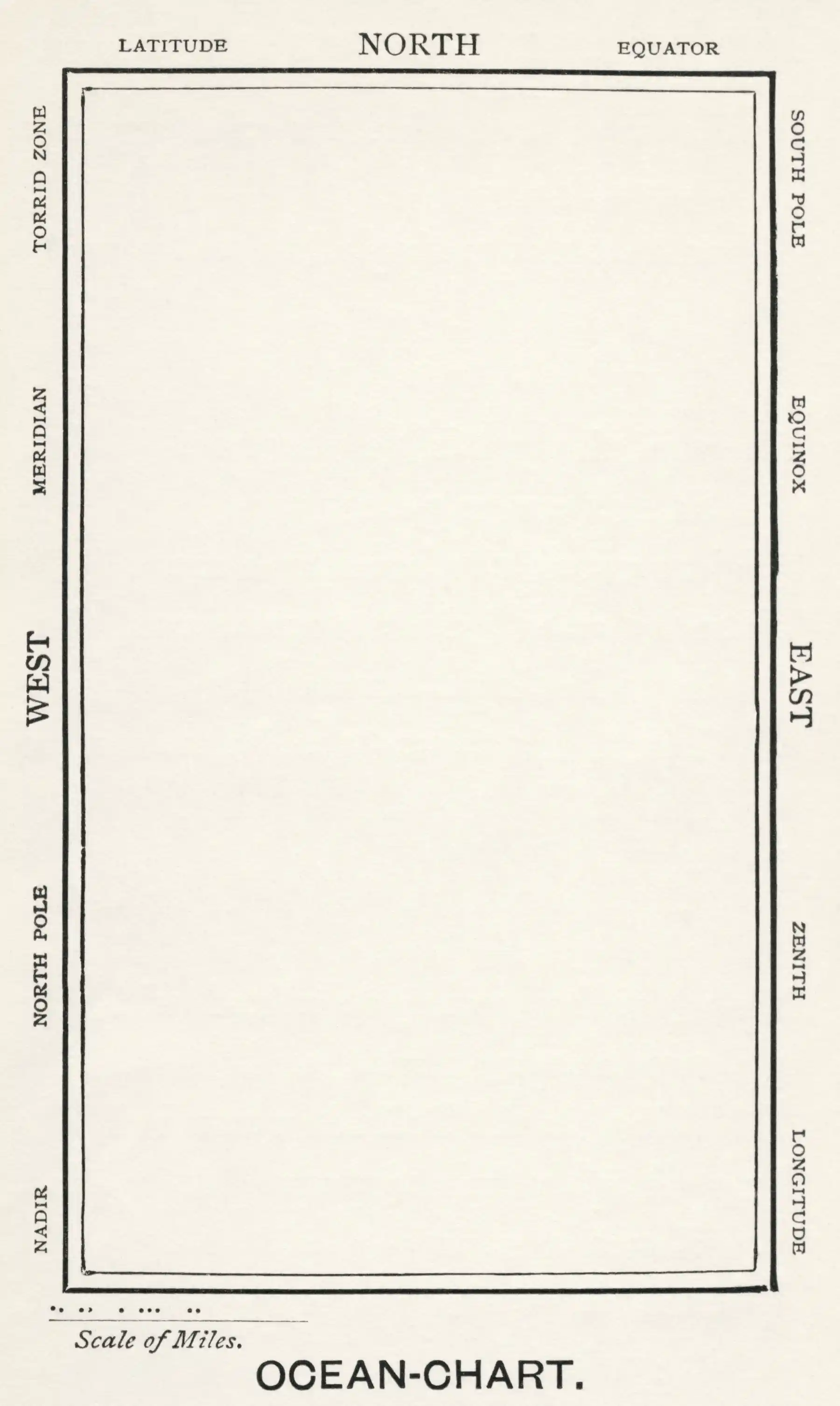
The J-space is a far cry from the Solarists’ attempts to know the totality of the Solarian ocean but hints at dimensions beyond that might become knowable. In mathematician Lewis Carroll's The Hunting of the Snark, a map of the ocean is rendered as a blank rectangle; void of "Mercator's North Poles and Equators, Tropics, Zones, and Meridian Lines" the ocean is released from Euclidean containment and pregnant with possibility. Look closely and offshore islands might start to emerge from beneath the whitewash. It just takes a good eye to see them.
Isabelle Bucklow is a cultural critic and consultant. An anthropologist by training, Bucklow writes widely on the relationship between gesture, image, technology and magic.