

Embodiment in the Age of AI
From prosthetic limbs to prosthetic minds, bionic artist, researcher and Evermay Futures Fellow, Viktoria Modesta draws on two decades of experience with advanced medical devices and body augmentation to reframe our relationship with AI. Modesta draws parallels between technologies born from necessity – the prosthetic leg, the space suit, the osseointegrated implant – and technologies that increasingly operate beneath the surface of perception, asking what their origins reveal about human intention. Through hyper-embodiment, Vipassana meditation, and the architecture of the inner self, she arrives at a different question: not what AI can do, but what values, intentions, and qualities of humanity we bring to its creation. In today's techno-cultural wave, Modesta finds in embodiment a practice of deep and nuanced inner work that reaches beyond certainty and speculation.
Viktoria Modesta
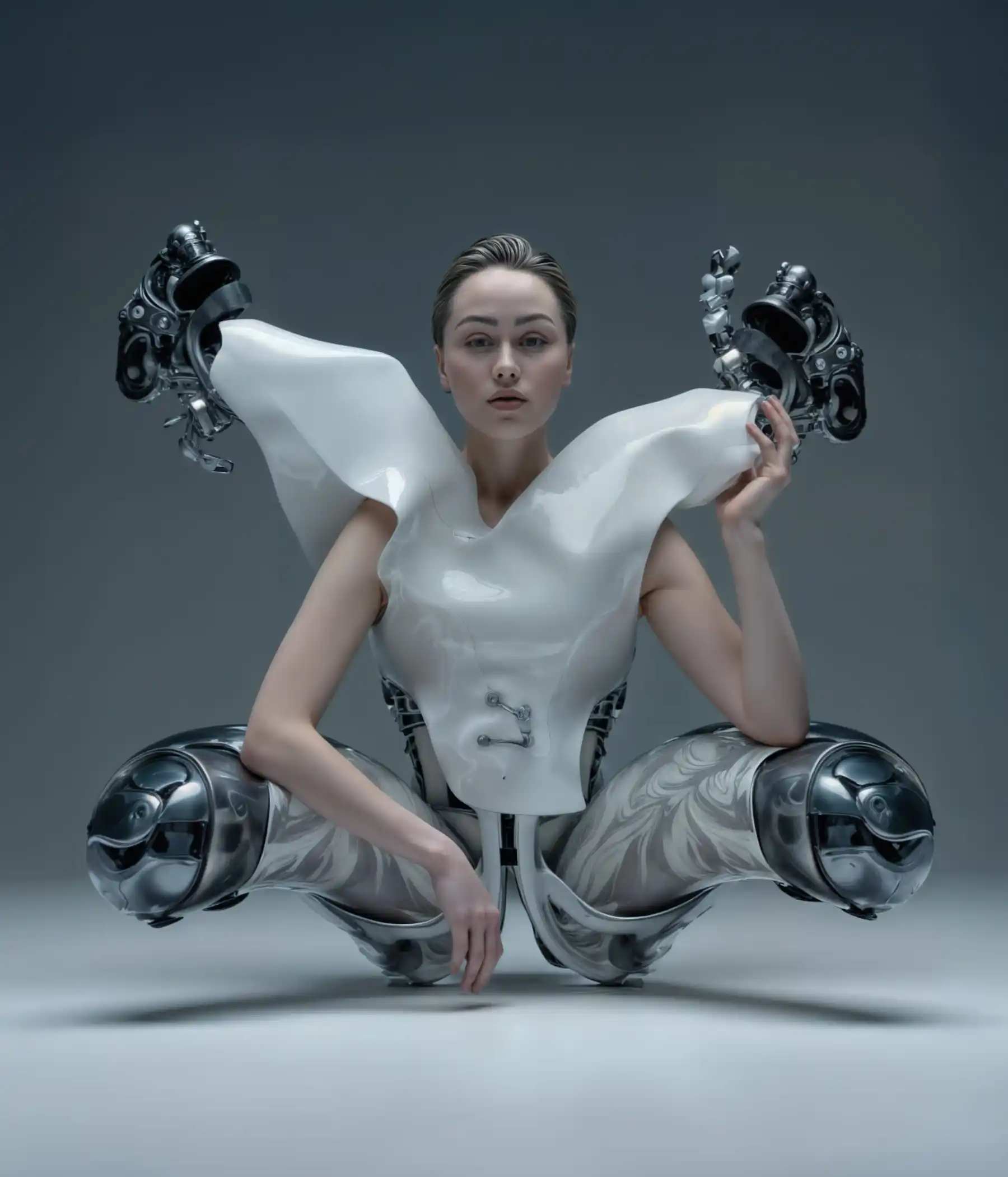
No one teaches us how to relate to the artificial. Beyond a user manual, we are left to our own devices to define, understand, and navigate our relationship to augmenting technologies.
I first came to experience why this matters as a little girl. Born with a leg injury, my early life became a long stretch of hospital stays and dramatic medical interventions. After a narrow escape from a Soviet orphanage amid a cultural atmosphere of eugenics, there it was: a category of devices that was unlike any tool of transformation I'd seen in Disney or Hollywood movies.
My life became a map of orthopedic shoes, leg lengthening, crutches, prosthetics, braces, and other medical devices. These were artificial layers for the human body capable of altering ability, capacity, well-being, image, and ultimately destiny.
Fear, grief, and shame echoed and still reverberate through the design of medical devices.
INTENTION
Despite being made of wood, plastic, metal, and leather, they were, above all, instruments of human intention. It was a stark contrast to see how these tools of physical transformation could be fuelled by a wildly different intention than Cinderella's slipper, whose origin belonged to another register of imagination. Fear, grief, and shame echoed and still reverberate through the design of medical devices.
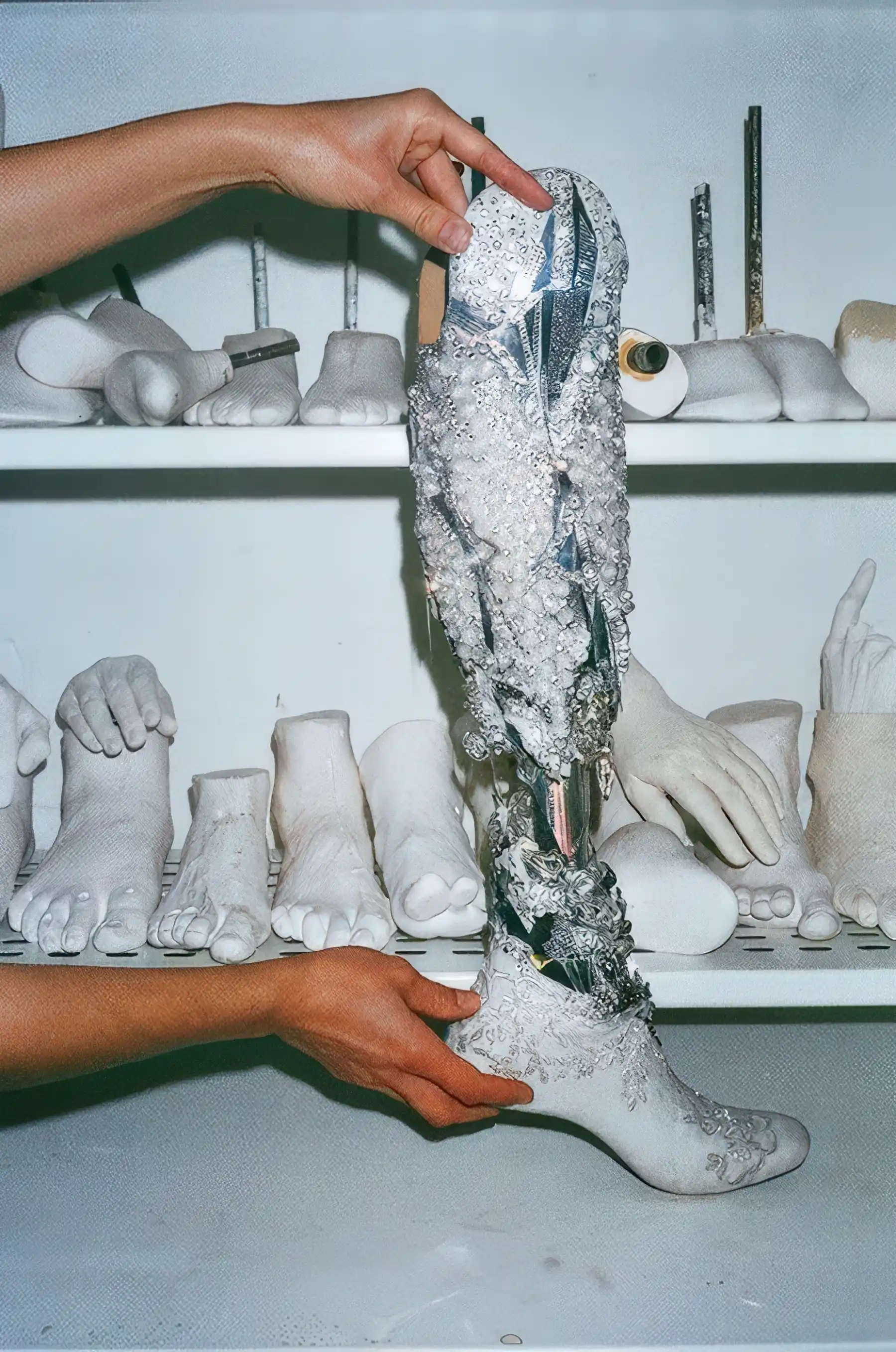
These tools of physical transformation could be fuelled by a wildly different intention than Cinderella's slipper, whose origin belonged to another register of imagination.
The intention behind consumer technology often only becomes visible with time. Like a seed, its true nature reveals itself as it grows. Some expand our agency. Others hijack. Apps and devices that drain our bandwidth, tap into our insecurities and leave us chasing a dopamine hit are another node in the intention spectrum in innovation. We are in a race to increase strength, speed, life span and intelligence. But without acknowledgment that we are beings powered by reflection, relation, empathy, the technological pursuit turns into sport, a series of metrics and wins in the productivity or longevity game.
The game of transcending the human condition has been the predominant narrative that I used to subscribe to. After two decades of extreme experimentation with alternative body architecture, decoding and amplifying my biology, I found that ideas born from speculative imagination and the lived experience of human-machine integration are wildly different. I would go as far as to say that building the future from data-rich reality can take us somewhere speculation alone never could.
I would go as far as to say that building the future from data-rich reality can take us somewhere speculation alone never could.
Reality has been underplayed. In our race toward the future, we often privilege imagination over experience, even though experience is where our assumptions are refined, and sometimes completely overturned.
Today, the technologies I find most meaningful are those born from necessity. It's hard to protest someone getting a heart valve or a replacement joint in fear of losing humanity vs. the pop culture ideologies of cyborgs. People living with advanced medical technologies are among the first to experience the realities of deep technological integration.
A prosthesis and a space suit belong to the same category of technology, designed to allow us to function beyond biological limits.
Today, the technologies I find most meaningful are those born from necessity.
As we come to a critical time of facing our limits with AI, it's important to question what those limits mean. Perhaps the real question lies here: what is our relationship to ourselves and the tools we are creating?
HUMAN VALUE
Every era has a theory of the ideal human, valuing qualities such as skull shape, pallor, fertility. AI challenges us to reconsider not only what remains uniquely human, but which human qualities are worth preserving.
When I was a child growing up in post-Soviet Latvia, intelligence, beauty, and physical ability had a place in the hierarchy. You could choose to disagree with it, but there was a sense of certainty.
A prosthesis and a space suit belong to the same category of technology, designed to allow us to function beyond biological limits.
Today, long-held ideas about what is real, normal, and natural are rapidly making way for a world view that demands more nuance.
I was 15 when I asked the surgeons to amputate my damaged leg. I remember seeing a room full of long, shocked faces. My painful 'real leg' and my continued decline in mobility was presented as having more value than the alternative: an artificial leg with limitless iterations.
My experience may be unusual, but the questions it raises are becoming increasingly universal. This wasn't really an argument about a prosthetic. It was biology and artificiality weighed against each other, and I was not the one holding the scales. I see the same questions surfacing in debates around AI companions, cognitive enhancement, gene editing, cosmetic surgery, wearable tech, and brain-computer interfaces.
For centuries, we've approached illness and wellness as separate domains. Increasingly, they are becoming expressions of the same intention: taking conscious ownership of our biological future. What are the new ideals and values we want to create and embody?
THE WEIGHT
The beauty of this moment is that, increasingly, more technology draws our attention back to humanity. Just as darkness reveals the light, the artificial points back to the body and subsequently the mind. This contrast relating to AI brings into focus forms of embodied intelligence we still barely understand: the synthesis of life experience, environment, people, and ancestry, turning into perception, intuition, wisdom, meaning, judgment, taste, and action – through the gateway of the body.
What are the new ideals and values we want to create and embody?
We are approaching a technological body revolution on a new scale.
We are no longer bound only to the physical dimension ruled by gravity. Earth, space, and synthetic realities are the new frontiers humans have a stake in. These environments do not carry human presence equally.
In my research around new forms of embodiment, such as in microgravity or in machine-powered imagination, the value of weight frequently defines the quality of authenticity of human presence.
This contrast relating to AI brings into focus forms of embodied intelligence we still barely understand.
In weightlessness, your body becomes a foreign vessel. All previous sensations, assumptions about your abilities reset in that new reality. Governed by different laws of physics, your body parts and anything artificial gain equal novelty. A paralyzed body can fly with a push of a finger, your legs become useless waste of flesh, and new forms of body configuration start to make a lot more sense.
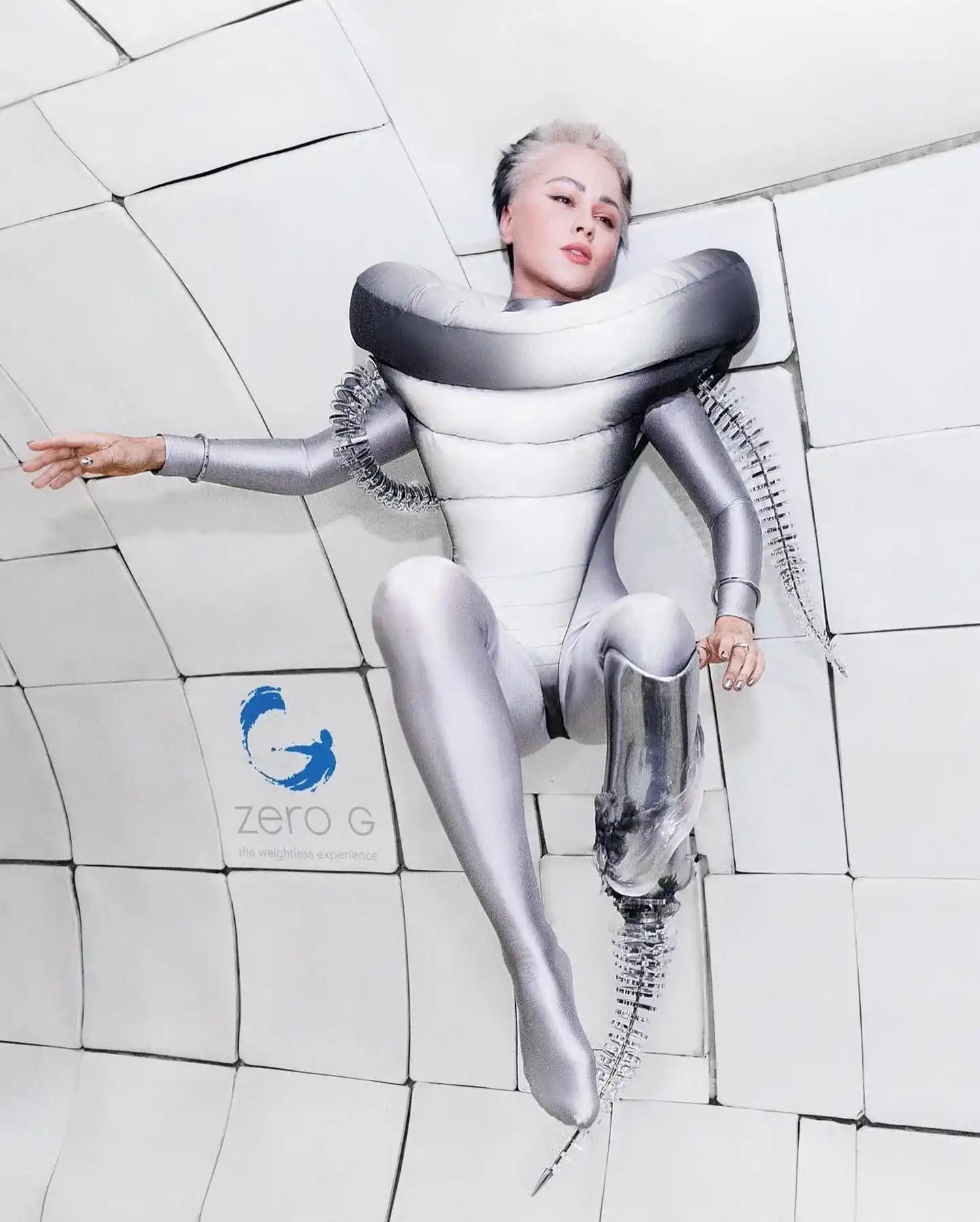
In some ways, from an embodiment perspective, zero gravity is the space between Earth and the virtual domain. A part of you remains while much of how you carry yourself transforms, revealing what we perceive as our value is tethered to the weight and movement of the body.
But the weight isn't in kilograms. Embodiment in virtuality is a frontier that dissects human presence further.
We are no longer bound only to the physical dimension ruled by gravity. Earth, space, and synthetic realities are the new frontiers humans have a stake in.
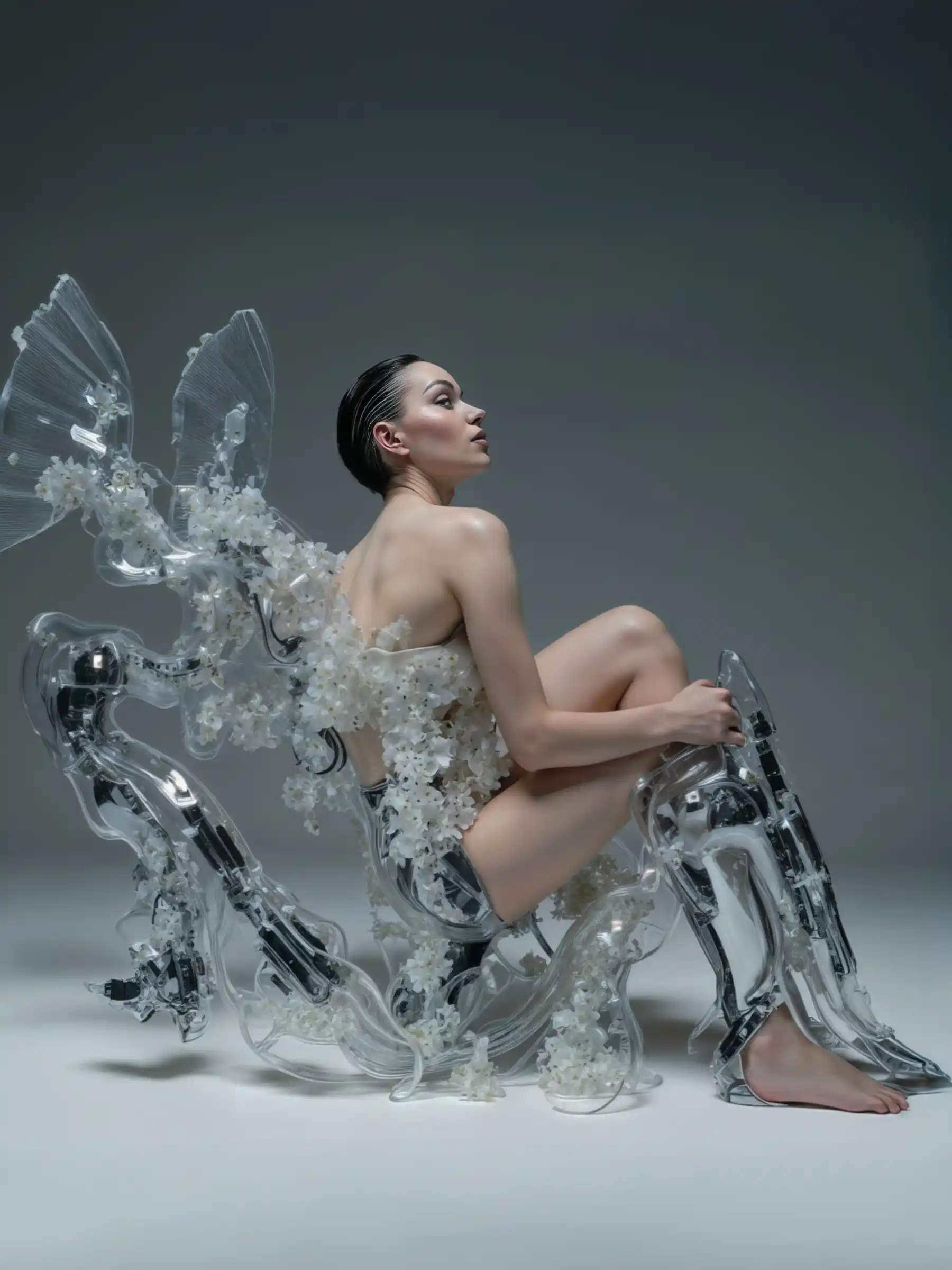
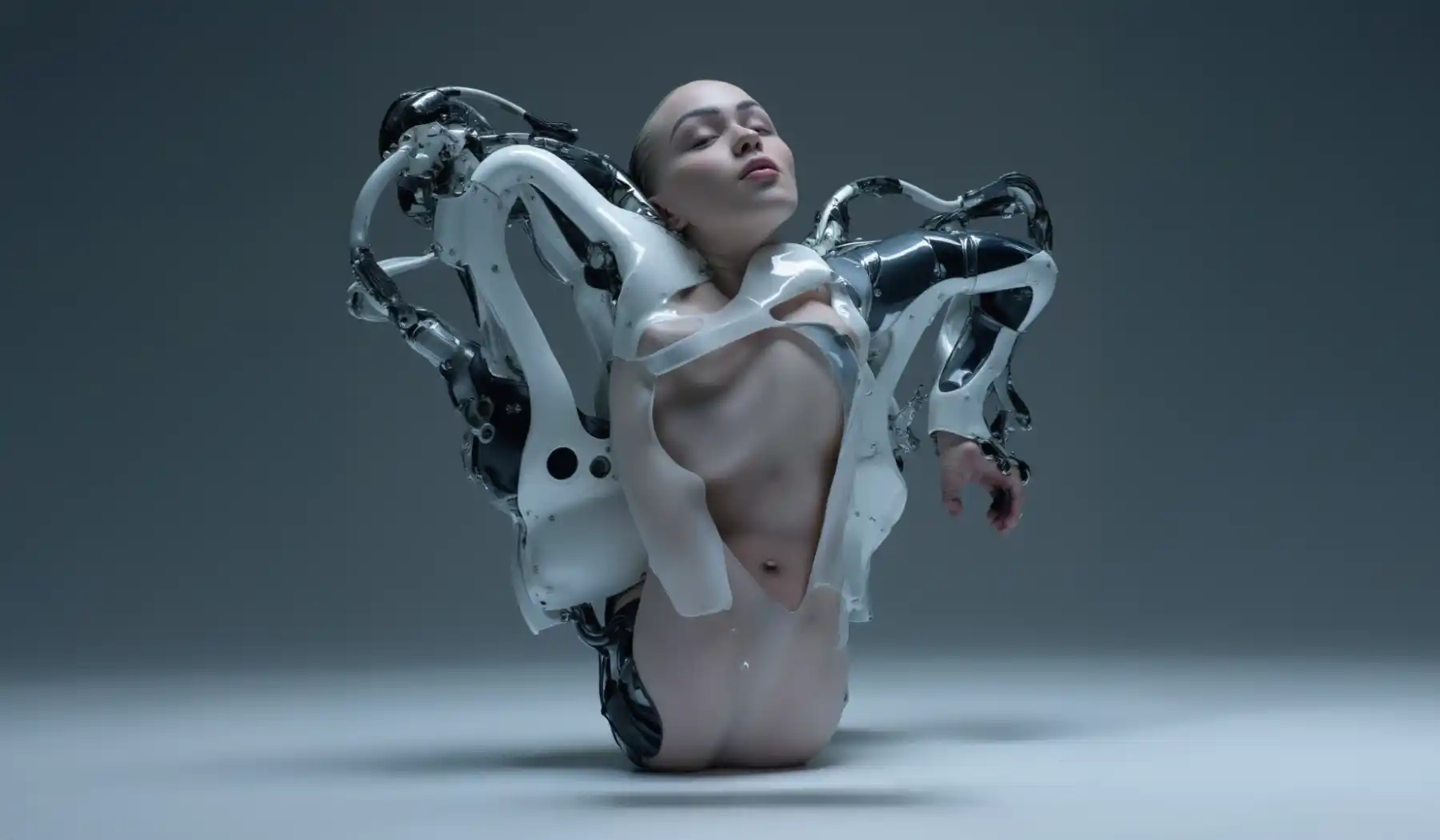
While generating tens of thousands of AI images of fictional and real humans and self-portraits for the Metabodies project (meta in its older sense, as in beyond the body), I began to observe patterns of how machines interpret the human body, but also how my own intentions, memories, and lived experience shaped what emerged.
It is the perfect playground to demonstrate convergent design universes: medicine, fashion, disability, aerospace, robotics, mythology, industrial design, gaming, and AI begin speaking the same visual language.
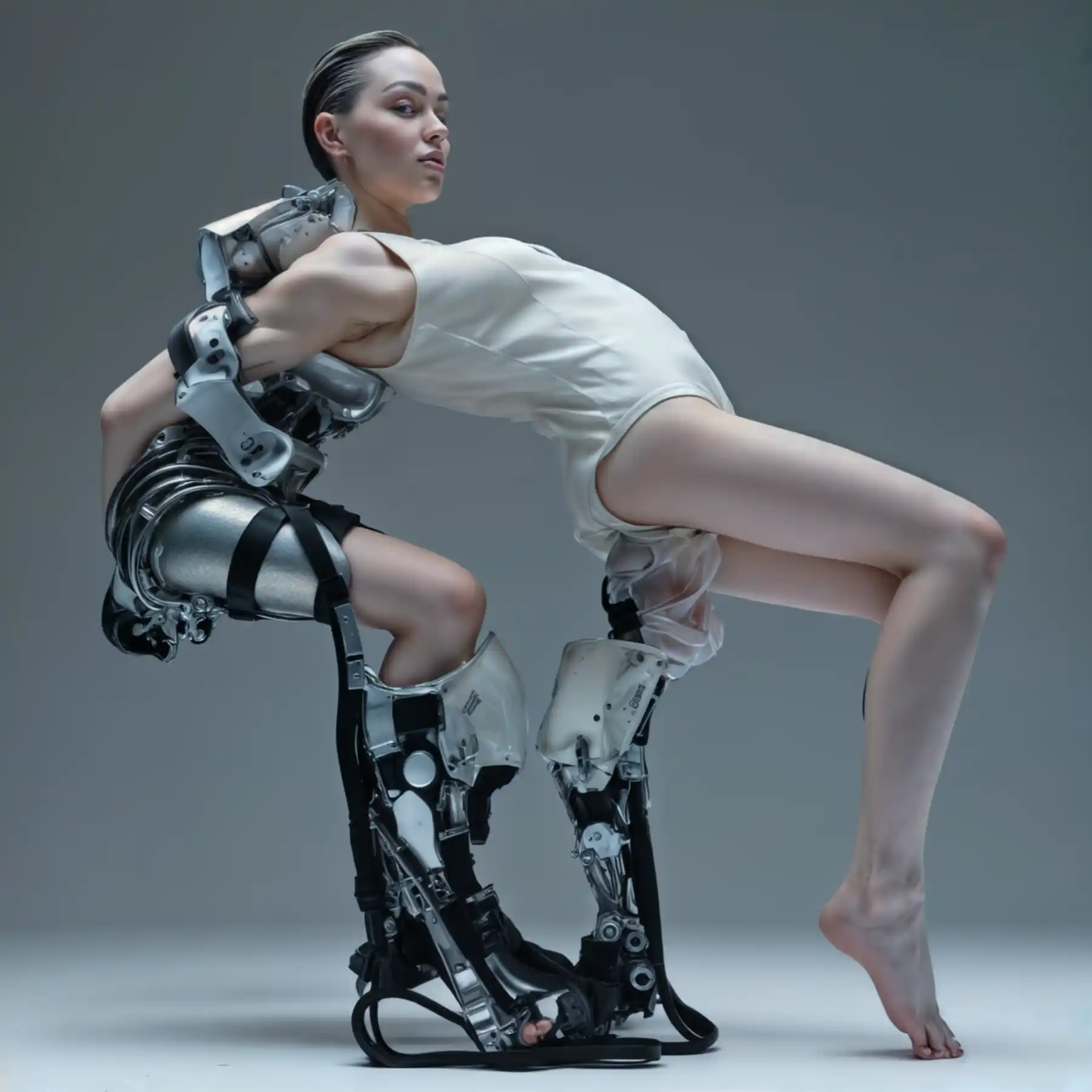
I became increasingly fascinated by what disappears and what remains when embodiment becomes frictionless.
Some images carried an unmistakable weight of emotion, story, personality, while others, despite their technical perfection, felt strangely hollow, as though they existed only as geometry. I spent years working in music, film, art, photography and the thread of infusing an image or a paragraph or chord arrangement with some form of human truth remains with AI tools.
I became increasingly fascinated by what disappears and what remains when embodiment becomes frictionless.
HYPER EMBODIMENT
The new kinds of digital technologies we are encountering are not even skin deep. Without a hardware body, AI's influence on human biology seems invisible. But we are beginning to feel contact. To navigate where that contact occurs for invisible augmentation, I find a few frameworks helpful.
Without a hardware body, AI's influence on human biology seems invisible. But we are beginning to feel contact.
Neuroplasticity allows humans to successfully map an external object or a machine as part of the 'self'; researchers call this extended embodiment. These might take the form of a tennis racket, a driving vehicle, or even a prosthetic limb. In each case, perception and ability stretch beyond the biological boundary.
This method of expansion of perception goes further. Imagine your identity on the internet: the images, the trail of your comments, your network of people. Notice how this virtual layer of your being adds to the dimensions of what you consider 'you'. Now visualize the data layer: your sleep score, steps, the hidden information of your body decoded as biomarkers, HRV, your hormones.
Where do you begin, and where do you end?
This observation is what I describe as hyper-embodiment. It begins to reveal the invisible architecture through which identity and perception are continually shaped. In this instance, examining identity reveals the landscape and contours of where invisible augmentation is already taking place.
Thoughts, beliefs, and other mental content shape our reality, but they also physically transform our nervous systems, our brains, and even gene expression.
The merger between biology and the artificial always leaves a trace. Sometimes it is visible: a bruise, a blister, a patch of tender skin where flesh meets hardware. Sometimes the traces are psychological, emotional, or perceptual. They are simply harder to see.
When we consider that AI has the ability to support, extend, and directly influence our inner mechanisms and biology, playing the role of a sophisticated prosthesis of the mind, the stakes in guiding the evolution of technology have never been greater.
INNER RESOLUTION
As our capacity to shape physical and synthetic worlds accelerates, the quality of the inner world from which those choices arise becomes increasingly consequential.
‘The inner world’ has many layers and modalities, it remains scattered across disciplines. The neuroscientist, the Buddhist monk, the psychologist, the physicist, the phenomenologist, the ecstatic movement and somatic practitioner, they may all be observing different facets of the same underlying phenomenon, the hidden operating network of human beings. AI might become one of our most powerful tools for synthesizing these clusters of knowledge. A machine learning model converging mind and body research like an embodied engine, could be the key to decoding embodiment, cognition, and even consciousness.
Delegating and offloading the integration of information to machines is humanities MO, but the integration of our own experience remains the hard and messy work we have to do ourselves.
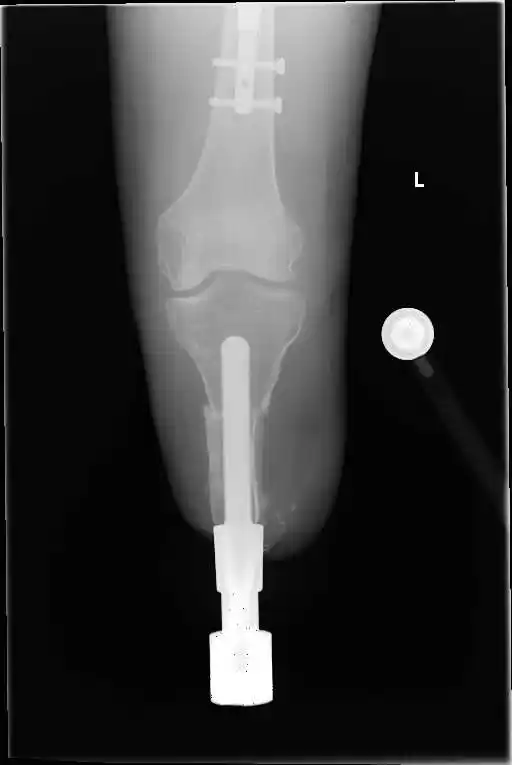
A few years ago, I underwent one of the most advanced skeletal integration surgeries, replacing the prosthetic socket I had worn for years with an osseointegration. A titanium implant, permanently anchored into my bone and exposed through my skin now connects to a prosthetic, transforming my proprioception from that of a missing limb to a new kind of meta limb. This experience put my complex inner system under stress, revealing layers of the body, the psyche, and identity, each struggling to stay in sync during extreme augmentation.
Ecologists study forests after fires, biologists observe organisms under environmental stress, engineers learn most about a machine when it fails. It is in moments of disruption that hidden relationships, dependencies, and patterns become visible. To a lesser degree, the pace at which our biology is having to adapt to the demands of the modern world is creating identity and perception fracturing, with very little guidance for how to navigate it successfully.
It is in moments of disruption that hidden relationships, dependencies, and patterns become visible.
I turned deeper to mindfulness during that time expecting to engage with a more advanced practice that would help me stay calm and endure my transformation. Instead I found the most powerful tool of transformation I have ever encountered.
Vipassana meditation is not a relaxation or a breathing technique. It is a protocol, a systematic training and sweeping of laser focussed attention within the framework of the body, observing every sensation without reacting. This practice would go on to defragment and upgrade some of my deepest inner architecture.
For years, I referred to the body as an instrument and an interface without fully experiencing what it means.
A ten day silent meditation course of observing the most fundamental reality of mind and body is a shocking and alien behaviour. It is precisely why it seems like a gateway to a subtler reality that lies below the surface of daily experience. Some time spent in that mode surfaces the subconscious programming that runs most of daily life: old reactions, and beliefs. Attention and observation appear to reorganise the fundamental parts of the inner architecture, showing glimpses of how the deepest layers of the human condition can be updated and restored to an unusually higher level of resolution.
How do you feel about spending ten days in silence with yourself?
I see the irony of describing the most transformative and in some ways spiritual experience while reaching for a hard drive vocabulary. We infused machines with terminology borrowed from biology like ‘virus’ and ‘memory’ and now we apply the organising and performance logic of machines to our own biology.
The other piece is rather than ingesting more knowledge, the practice amplifies a quality that feels like one is becoming the source of knowledge.
This intrigued me as I was spending my time escaping out of my immobile body into generative AI experiments. While we tend to think of input from the human as prompts and mechanical commands alone, I came to believe that the quality of the input from humans while we engage with sophisticated machines matters.
Sharpened attention increases resolution, and increased resolution clarified my intention.
The heightened clarity of thought, the sense of connection and the deep sense of embodiment evoked by the Vipassana while under immense bodily stress made me question how we can cultivate these valuable skills in new radical ways that are more accessible.
How do you feel about spending ten days in silence with yourself? For many people, that question alone evokes horror. Yet how can we build technology with intention if we are unwilling to encounter our own source of intention?
From this inner-world perspective, the word artificial begins to feel like a paradox. Everything up to this point we call artificial has been conceived in the human mind and brought into the world through the body.
From this inner-world perspective, the word artificial begins to feel like a paradox. Everything up to this point we call artificial has been conceived in the human mind and brought into the world through the body. It bursts from us. In some ways you could say that the output of AI carries the echoes of our values, our fears, our imagination, our desires, our suffering, and our intentions.
As our ability to augment the body and mind reaches new heights, the ability to fine tune the skills of guiding our attention and becoming more fluent in the lived knowledge of our inner nature may become one of our most valuable, most enduring, human capacities.
Viktoria Modesta is a bionic artist, creative director, and futurist whose work explores the intersection of identity, technology, and human potential. Often described as the world's first Bionic Pop Artist, Modesta captured international attention through her performance at the London 2012 Paralympic Games and the viral Channel 4 film Prototype, winner of a Cannes Lions Silver Award.
As a Mission AstroAccess ambassador, Modesta has flown pioneering microgravity missions exploring accessibility and adaptation in space. She has presented at MIT, SXSW, MUTEK, Tokyo Innovation City Forum, and Artist & The Machine, among innovation conferences across Europe, Asia, and North America. She is a BBC 100 Women honoree, UNDP 2060 Ambassador, former MIT Media Lab Director's Fellow, and the subject of an Emmy-nominated documentary.
Her current project, Metabodies, is an AI-powered visual atlas exploring the future of human embodiment across Earth, space, and virtual environments. Modesta is currently an Evermay Futures Fellow.
@viktoriamodesta
@metabodies.ai